
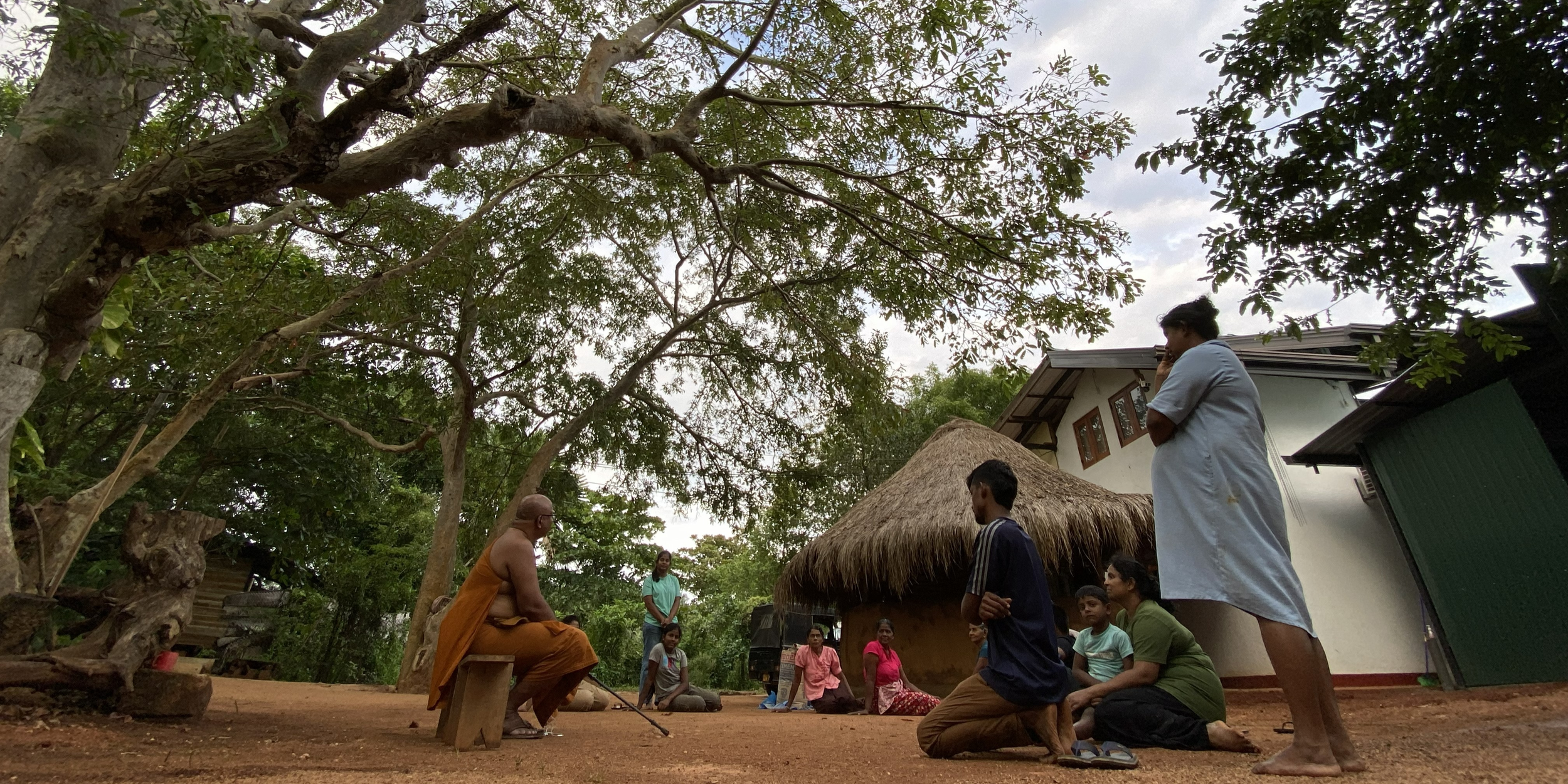
VISITING FOR THE DAY
If you are interested in visiting the monastery to offer food or requisites to the monks, or to come visit for the day, please contact the abbot beforehand. You may send an email and/or call at the designated times. Please refrain from coming to the monastery without having obtained permission first.
OVERNIGHT VISITS
Those interested in practicing in a more involved capacity at Chetiya Mandapa may apply for an initial visit of up to ten days. All guests must have a sincere intention to keep the eight precepts (see below for more information), to strictly adhere to the monastery schedule and all community rules and regulations. All guests must display proper respect to the resident community and must ask permission from the resident community before undertaking any tasks or jobs within the monastery to ensure their actions are appropriate.
As the monastery is a center for the training of monastics, it is unable to cater to long-term guests and also cannot host overnight visitors arriving unannounced. The chance to live with a community dedicated to meditation and mindfulness represents a precious opportunity, and guests are asked to show their appreciation by carefully observing monastery rules and guidelines.
In keeping with Buddhist tradition, the monastery does not charge for accommodation, food, or teachings. In general, staying at the monastery is about a way of life. Though a few times per year we do offer group retreats, for the most part staying here provides a chance for lay guests to develop mindfulness, generosity, and humility through living and participating within a monastic culture.
While staying at the monastery, practitioners should dress in white to symbolize their purity of intention. While men generally wear a white shirt and long white trousers, women dress in a white blouse and a long white or black skirt or pants. Visitors should dress modestly, casually, comfortably, and refrain from wearing provocative or revealing clothing (e.g. shorts or skirts riding high above the knees, translucent clothing, clothing revealing midriff or the back, tight clothing, leggings, tank tops, etc.). While this applies to both sexes, it is especially important for women to dress conservatively out of respect and consideration for the celibate male monastics.
Lay guests generally stay in dormitories with others who are visiting. Guests are expected to clean their places of stay each day as well as the dormitory restrooms.
Visitors share in the meal offered to the monastic community by the laity. In keeping with Buddhist tradition and the ethic of simplicity, monks and lay guests generally eat only one meal a day, though drinks and tonics may be taken in the evening at the designated time with the community. As the monastery receives food as a gift, it is unable to cater to special diets.
In order to develop mindfulness, clarity and seclusion, guests are highly encouraged to avoid using the internet while visiting Chetiya Mandapa, and should keep any personal electronic devices either off or in airplane mode during their stay. No Wi-Fi will be accessible within the monastery.
Languages spoken at Chetiya Mandapa are English and Sinhala.
Chetiya Mandapa requests that visitors kindly refrain from smoking during their stay.
It is best if lay guests have some basis in meditation practice, and knowledge of how to conduct themselves in a Buddhist culture.
DAILY SCHEDULE
5:30am – 6:30am
Group Meditation
6:30am – 8:30am
Cleaning, pindapat offering, assisting with any kitchen duties
8:30am
Anumodana Blessing
8:45am
Eat the meal and then help with the clean up
10:00/10:30am – 11:00/11:30am
Group Meditation
11:00/11:30am – 12:30/1:00pm
Rest
12:30pm/1:00pm – 2:00pm
Walking Meditation
2:00pm – 3:00pm
Sitting Session
3:00pm – 4:00pm
Rest/walking meditation
4:00pm – 6:00pm
Cleaning, Nampana, Rest
6:30pm – 8:00pm
Chanting and Meditation
8:00pm - 8:30pm
Break
8:30pm – 9:30pm
Dhamma Discussion
THE EIGHT PRECEPTS
The Buddha laid down the eight precepts as tools to assist sincere practitioners develop on the path. While staying at Chetiya Mandapa, guests are asked to observe the following trainings in order to live harmoniously with the community and assist their practice:
To refrain from the taking the life of living beings.
To refrain from taking what is not given.
To refrain from all sexual activity.
To refrain from harmful and untruthful speech (including that which is harsh or unnecessary).
To refrain from taking intoxicating drinks and drugs.
To refrain from taking food after midday.
To refrain from entertainment, beautification and adornment.
To refrain from lying on high and luxurious sleeping places.
To ensure that guests fit well into the resident community, those interested in staying multiple days are asked to undergo an application process. First-time visitors may apply to stay for a maximum of ten days (but may be asked to depart early).
The monastery is unable to host overnight visitors who arrive unannounced.
How To Apply
Those interested in staying at the monastery are asked to fill out the Personal Details Form found below and to send a photo of themselves via email to cheityamandapa@gmail.com. First-time visitors may apply to stay for a maximum of ten days (but may be asked to depart early). The monastery is unable to host overnight visitors who arrive unannounced.
Preparing For Your Visit
After being accepted, an applicant should:
Re-read the sections above and the Frequently Asked Questions below and have a clear understanding as to what is required of one.
Send a copy of one’s fully paid, confirmed round-trip air ticket.
Send a copy of one’s travel health insurance covering their allowed stay at Chetiya Mandapa.
Ensure one has the required visas for a stay in Sri Lanka.
Ensure that one is in good physical and mental health
If there are any changes to arrival and departure dates, the monastery must be notified and permission given. Guests are asked to leave their passports with the abbot until the morning of their departure.
Guests should organize: visa, white clothing, toiletries, mosquito repellent—though there is no malaria in the area —, towel, and torch. A pair of flip flop sandals may be useful as well.
1 to 3 days before coming, guests should contact the monastery with their estimated time of arrival. If possible, one should come before 8:30 a.m.
APPLYING
FREQUENTLY ASKED QUESTIONS
-
Taxi
If traveling by car or taxi, one may use the map on the Contact page.
Bus
If travelling by public transport from the Colombo: Colombo Basian Mawatha Bus Terminal to Anuradhapura. Buses run about every 30-minutes. Travel time is about 4-6 hours. Common Routes: 15-1-1 (Via Kurunegala/Dambulla), 87 (Colombo —> Jaffna, get down at Anuradhapura), 04 and 57 expressway routes.
There are also early morning luxury buses (around 3am-6am departures).If you are near Negombo, some Colombo—Jaffna buses pass through Negombo road, so you may not even need to go into Colombo.
Once you arrive in Anuradhapura you may take a taxi to the monastery.
Trains
Normally there are direct trains from Colombo Fort to Anuradhapura (about 3 hours 45 minutes).
However, as of early 2026, the Moha—Anuradhapura railway section is temporarily closed due to renovation and cyclone damage. So direct train services may not be operating right now.Sometimes you can take a train to Maho, then bus to Anuradhapura.
-
The Buddha prohibited his monks and nuns from handling money or accepting payment for teaching so that the Dhamma might remain a gift available to all. Preserving this ethic of generosity, Chetiya Mandapa and monasteries of the Thai Forest Tradition freely provide lodging, food, and Dhamma materials to those interested in pursuing the Buddha’s path. However, if one feels they have benefited from their stay at Chetiya Mandapa, they may contemplate how best to help it continue as a place of refuge and practice for others in the future.
-
As they are unable to handle money or beg, Buddhist monks and institutions depend entirely on the generosity of laity for their day-to-day existence. While one may offer food or requisites directly to the monks, monetary gifts may be deposited directly into the Chetiya Mandapa Bank account.
-
A period of Dhamma discussion will be available in the evenings after the group chanting and meditation session. All concerns regarding Dhamma or monastic practices should be directed to the abbot.
-
Previous meditation practice is not a requirement to stay at the monastery. But if you have meditated before then please clearly explain your practice in the application form.
-
No, while staying at chetiya Mandapa you agree to follow the instructions and guidance given by the senior teacher.
-
Yes — chairs are available in the back of the meditation hall for those still not used to sitting for long periods on the ground.
-
Yes — as long as you have spoken with the abbot and received permission first. All guests and residents are not to depart the monastery for any reason without direct permission from the abbot beforehand.
-
While ordination at Chetiya Mandapa is a possibility for foreigners, those interested are asked to first investigate the monastic life by visiting an Associated Monastery of the Ajahn Chah lineage nearer to home, as the reality of the monastery life may differ from their expectation. After becoming familiar with the form, one may request to come visit Chetiya Mandapa and see if they harmonize with the community. While many factors affect prospects of ordination, the decision to accept a student or not ultimately rests with the abbot.
While Chetiya Mandapa does not have a community of nuns, many monasteries in Thailand and abroad offer female ordination in varying capacities.
-
Chetiya Mandapa does offer temporary novice ordination (10-precepts) to individuals who have stayed as an overnight guest on at least 3 occasions. Each visit must have been a minimum of 10-days. After visiting the required number of times, one must receive permission from the community before being offered temporary ordination.
-
If you don’t have a set of white clothes, you can obtain one in Colombo or Anuradhapura. Simply ask your hotel host or taxi driver where to find an appropriate vendor.